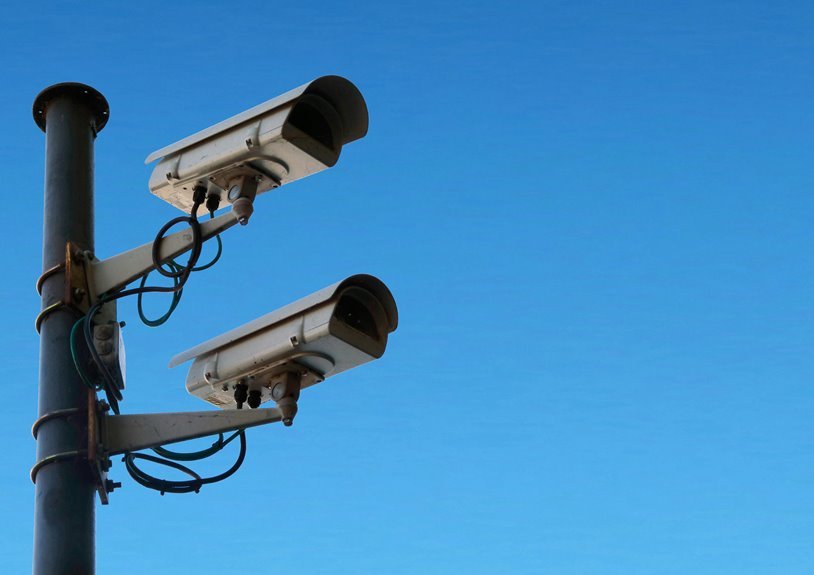
The landscape of security technology is evolving rapidly, driven by advancements in AI, biometric systems, and IoT integration. These innovations promise to enhance public safety through sophisticated monitoring and predictive analytics. However, they also raise pressing concerns regarding user privacy and data protection. As these technologies become more prevalent, the challenge will lie in ensuring a balance between enhanced security measures and the safeguarding of individual rights. What implications might this balance hold for the future?
The Rise of AI-Driven Surveillance Systems
As cities continue to expand and populations grow, the integration of AI-driven surveillance systems has emerged as a pivotal solution for enhancing public safety and security.
Utilizing facial recognition technology and predictive analytics, these systems can identify potential threats and analyze behaviors in real-time.
While promising enhanced safety, they also raise important discussions about privacy and personal freedom in an increasingly monitored society.
Enhancing Security With Biometric Authentication
With the increasing demand for secure access in both personal and professional environments, biometric authentication has emerged as a leading solution that leverages unique physical characteristics to enhance security measures.
Techniques such as facial recognition and fingerprint scanning provide robust defenses against unauthorized access, allowing individuals to retain autonomy over their information.
This innovative approach not only simplifies user experiences but also fortifies overall security frameworks.
Addressing Privacy Concerns in Future Security Innovations
While biometric authentication offers enhanced security, it simultaneously raises significant privacy concerns that must be addressed to ensure user trust and compliance with regulatory standards.
Implementing robust data encryption techniques can safeguard personal information, while prioritizing user consent fosters transparency.
As future security innovations evolve, balancing effective protection with individual rights will be crucial in maintaining public confidence and promoting the responsible use of technology.
The Role of IoT in Creating Smart Security Solutions
The integration of the Internet of Things (IoT) into security systems is revolutionizing the way safety is approached in both residential and commercial environments.
Smart sensors and connected devices enable real-time monitoring, enhancing responsiveness and situational awareness.
This interconnectedness fosters a proactive security approach, empowering individuals to maintain control over their environments while significantly reducing vulnerabilities and potential threats.
Conclusion
As the landscape of security technology evolves, the delicate dance between innovation and individual rights becomes increasingly intricate. With AI, biometrics, and IoT paving the way for smarter solutions, society stands at a crossroads, where enhanced safety must not come at the cost of personal privacy. Like a double-edged sword, these advancements hold the potential to either fortify trust or sow seeds of doubt among the public, necessitating a balanced approach to safeguard both security and freedom.